Celebrating a New Laboratory in Ibadan
February 2004 - The drums had been rolled out and the turnout was unprecedented, for the academic community had cause to jubilate. The commissioning ceremony in February celebrated not only the new APIN-supported HIV Reference Laboratory at University College Hospital (UCH) in Ibadan, but also recent advances against HIV.
Professor Phyllis Kanki, director of APIN, delivered a lecture on the challenges of HIV prevention in Nigeria in which she commended the federal government for its prevention efforts. "Government support for HIV prevention has been particularly strong in Nigeria," she said. "The APIN program has witnessed and benefited from the strong support of President Obasanjo. In addition, the HIV prevention, treatment, and care programs under the Ministry of Health and the National Action Committee on AIDS demonstrate the commitment of the government to HIV prevention."
Professor Kanki identified education of the public as a key component in the success of prevention programs, adding, "We hope that education will increase the uptake of HIV testing and that behavioral change programs will accompany the voluntary counseling and testing efforts to encourage people to reduce their risk of HIV acquisition."
Professor Kanki also pointed to an insidious trend that has plagued countries everywhere. "As epidemics have increased, stigma and discrimination have typified societal responses," she said. "These must be dealt with promptly, as they undermine prevention programs."
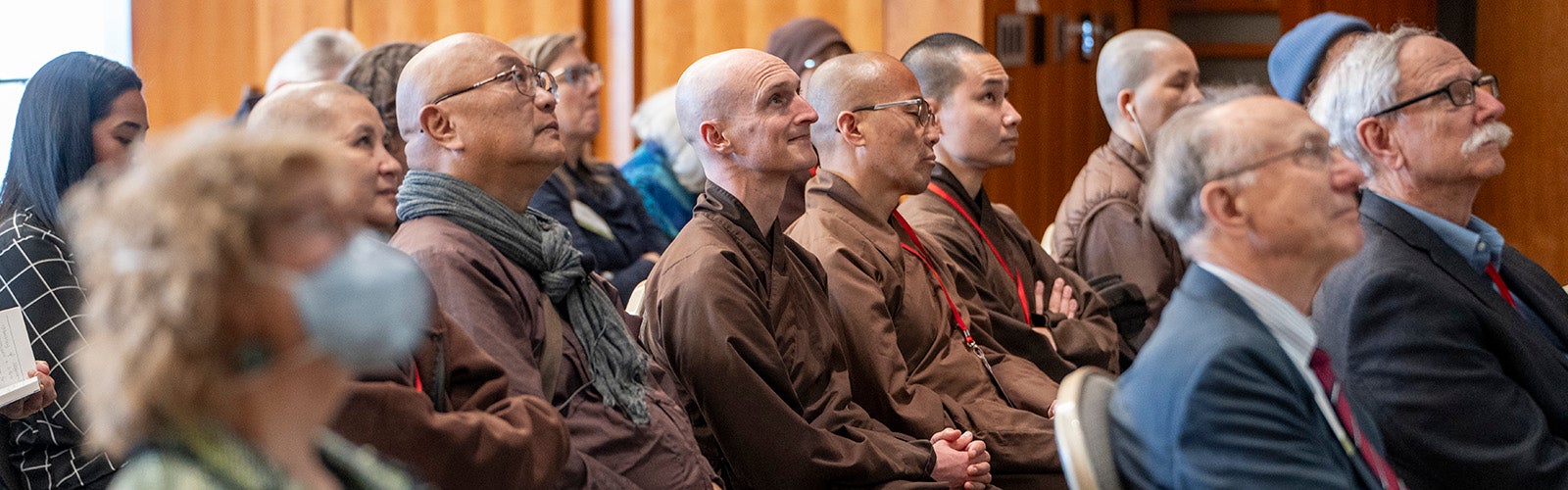
After the talk, which took place in the College of Medicine Auditorium, the gathering moved to the Virology Department, where a representative of the Ministry of Health, Dr. Gbolahan Adegbile Taiwo, performed the actual commissioning.
"We have commenced the most ambitious antiretroviral access initiative in Africa in 25 federal government centers," Professor Eyitayo Lambo, the Honorable Minister of Health, stated in an address read on his behalf. "Just in the past week, the centers have received a saving line of ARV supply. We promise that the supply will not be interrupted again, and a special Ministry of Health expert committee is looking at the effects of the last break."
Professor Lambo also expressed his ministry's appreciation for the contributions of APIN and the Bill & Melinda Gates Foundation in the quest to stem the spread of HIV.
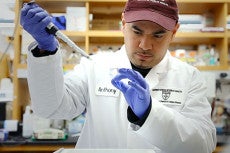
The new HIV Reference Laboratory now provides HIV screening and confirmation for UCH patients, as well as referrals from several hospitals in the southwestern part of the country. The laboratory also provides HIV confirmatory testing and CD4 counts for people attending the national antiretroviral center at UCH. In addition, the laboratory provides support for the UCH program aimed at preventing mother-to-child transmission of HIV, the market agent study that the Association for Reproductive and Family Health is launching, and the HIV surveillance, voluntary counseling and testing, and blood safety programs of the Oyo State Government.
"We are all extremely proud of the laboratory," said Dr. Oluwole Odutolu, APIN's senior project director, "and we look forward to the new surveillance surveys and interventions that will be forthcoming."
Professor David Olaleye, who directs the new laboratory, expects it to be critical to the many technologically difficult HIV and STD assays that are part of the HIV/AIDS studies that UCH conducts. He added that the laboratory's facilities for monitoring infections are comparable to those anywhere in the world.
"APIN's final goal is HIV prevention," says Professor Olaleye. "It is an intervention based on evidence, and already we have generated many data that will allow us to track the trends, levels, and driving forces of the epidemic in particular geographic areas. The laboratory is especially important because, before you do anything for anybody, you have to know that person's status. And that is where reliable diagnosis comes in."
Among the scores of dignitaries who attended the commissioning ceremony were Professor Ayodeji Falase, vice chancellor of the University of Ibadan; Professor A. O. Ilesanmi, chief medical director of UCH; Professor Israel Adewole, provost of the College of Medicine at the University of Ibadan; and many members of the academic community.
During a later meeting with the press, Professor Kanki said that the war against the epidemic is on course. "We are not losing the war against HIV/AIDS," she said. "In fact, more and more strides are being recorded."
Article contributed by Mr. Akin Jimoh and Mr. Wale Fatade of Devcoms, a science communication and health promotion organization coordinated by Nigerian journalists. |