Best Practices Across Borders
January 2005 - In opening a recent AIDS conference, Dr. Patson Mazonde, director of health services in Botswana, offered a cautionary tale. There once was man, he said, who owned an orange grove. Determined to cultivate the nation's preeminent orchard, he trained his staff to become the best pickers, the best basket handlers, the best truck drivers. But at the end of an intensive day of training, not a single ripe orange had been plucked from any branch, and the baskets sat empty. "With the HIV epidemic spreading so quickly," Dr. Mazonde urged conference participants, "let's not neglect to take immediate, targeted action."
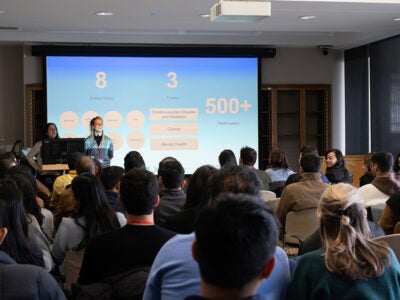
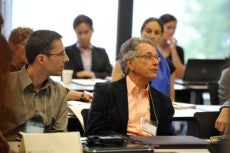
The participants were attending the first annual Tri-Country AIDS Clinical Care and Treatment Conference, which APIN Plus and the Harvard PEPFAR program sponsored from January 29 to February 4 in Gaborone. There HIV experts from Botswana, Nigeria, Senegal, Tanzania, and the United States convened to share hard-earned wisdom and promote best practices that would allow them to work more effectively.
Colleagues from Botswana offered lessons based on extensive experience with the epidemic; as least one in three adult Batswana is infected with HIV. The national ARV programknown as Masa, the Setswana word for "new dawn"now provides antiretrovirals to more than 20,000 people living with HIV. The thriving prevention-of-mother-to-child-transmission program has built on a number of important clinical trials aimed at evaluating different intervention strategies. And the state-of-the-art Botswana-Harvard HIV Reference Laboratory provides support for many federal programs in addition to serving as a national HIV/AIDS research laboratory.
The participants also found value far beyond the conference walls, on site visits in and around Gaborone. One day, for example, they visited an orphan day care center just outside the city. Traditionally the Batswana entrust the care of orphans to relatives, but the HIV epidemic has so devastated families that the center was established to provide additional support. Dula Sentle now provides a home away from home to nearly a hundred children orphaned by AIDS.
Both the site visits and the conference itself sparked a great deal of positive feedback. "The meeting was indeed a rare forum," says Dr. Oni Idigbe, director general of the Nigerian Institute of Medical Research. "It provided opportunities to learn and share experiences across the countries, especially in the care and support programs for people living with HIV. It was also an eye-opener to see the good practices and well-tailored programs in Botswana. We imbibed many new ideas that we can try to implement in Nigeria to improve the quality of our programs at the state and national levels." |